Contact Us
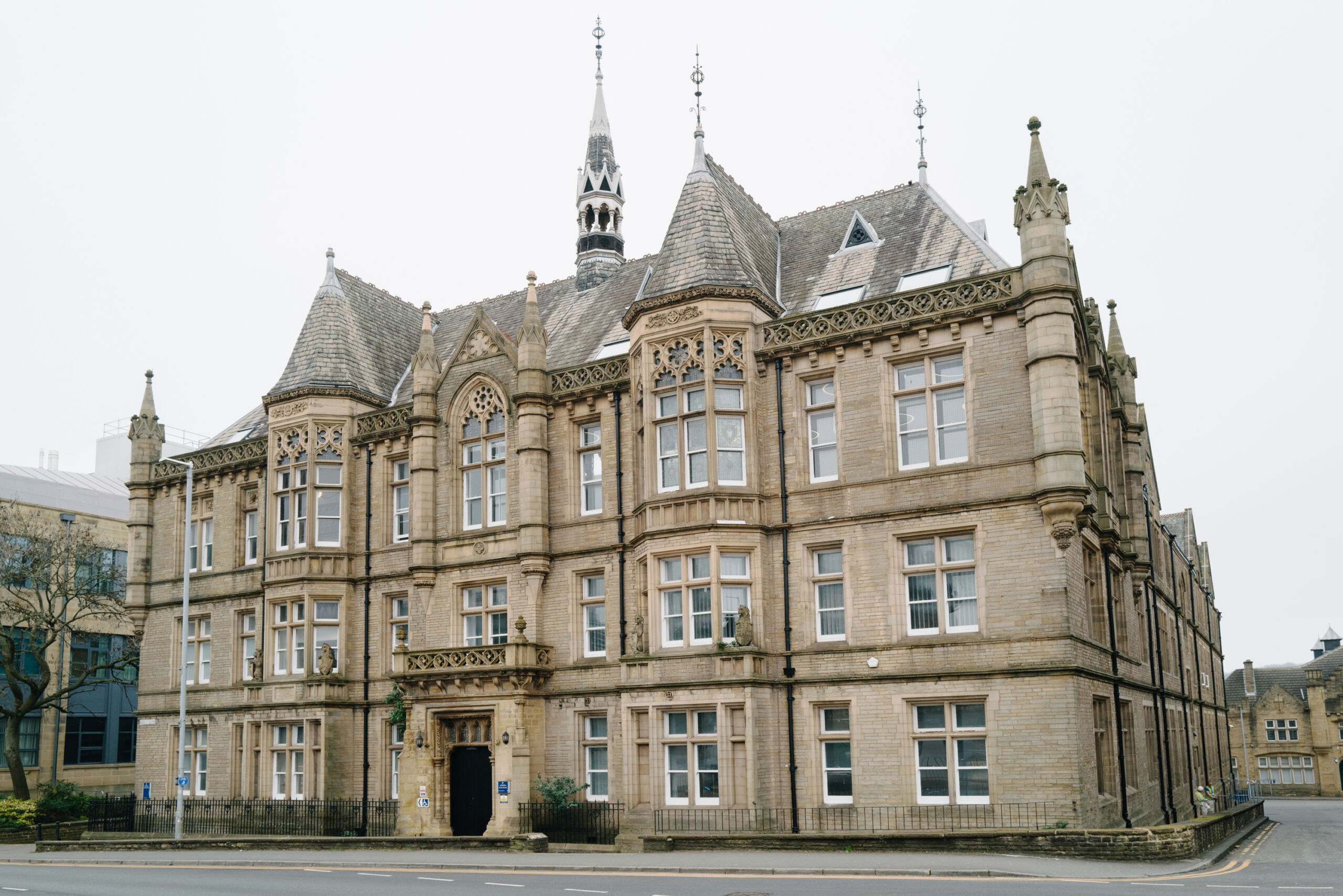
The refurbishment of the University of Huddersfield’s Grade II Listed Ramsden Building has now been successfully completed, marking a significant milestone in the revitalisation of one of the town’s most historic landmarks.
Originally constructed in the 1880’s as Huddersfield’s first Technical School and Mechanics’ Institute, the Ramsden Building holds substantial architectural and cultural importance. Now, more than 140 years later, the building has been carefully restored and reimagined to support contemporary university life, while preserving and celebrating its rich heritage.
GSSArchitecture acted as Lead Consultant, Architect and Principal Designer (BR and CDM), working alongside main contractor Henry Boot Construction to deliver the transformation.
The project represents a major step forward in the University’s sustainability ambitions, with the Ramsden Building acting as a cornerstone project by becoming the first listed building within its estate to undergo full decarbonisation. The refurbishment replaces outdated mechanical and electrical systems with modern, energy-efficient solutions, including the installation of air source heat pumps, supporting the University’s drive towards Net Zero in operation. As a result, the project removes 7% of the University’s gas-related emissions, saving around 2,450 tonnes of CO₂ annually. The success of these sustainability outcomes has already been recognised by the National Project Excellence Awards, with Ramsden Building winning Decarbonisation Project of the Year.

Ramsden Building Double Height Event Space - Credit: HBC
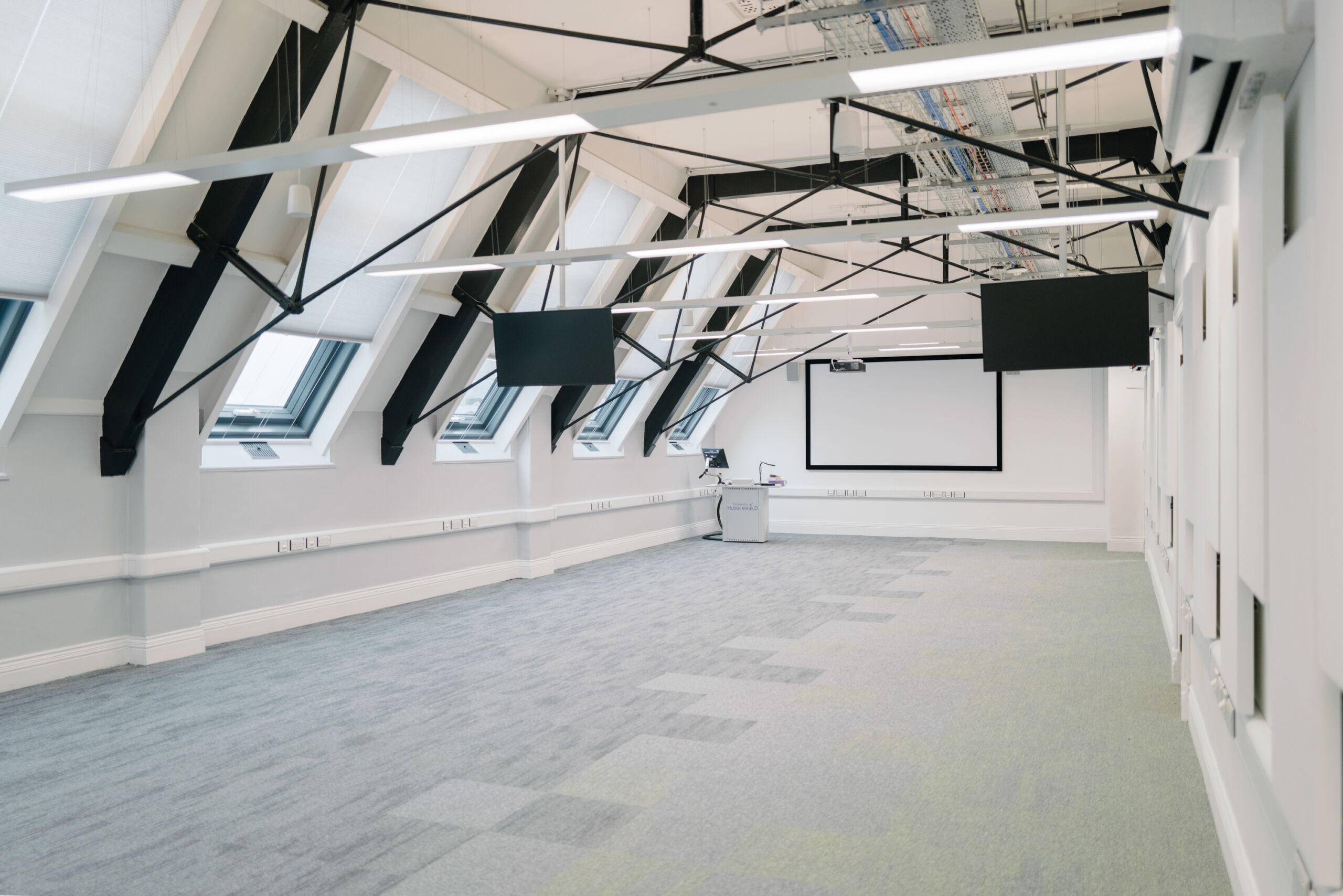
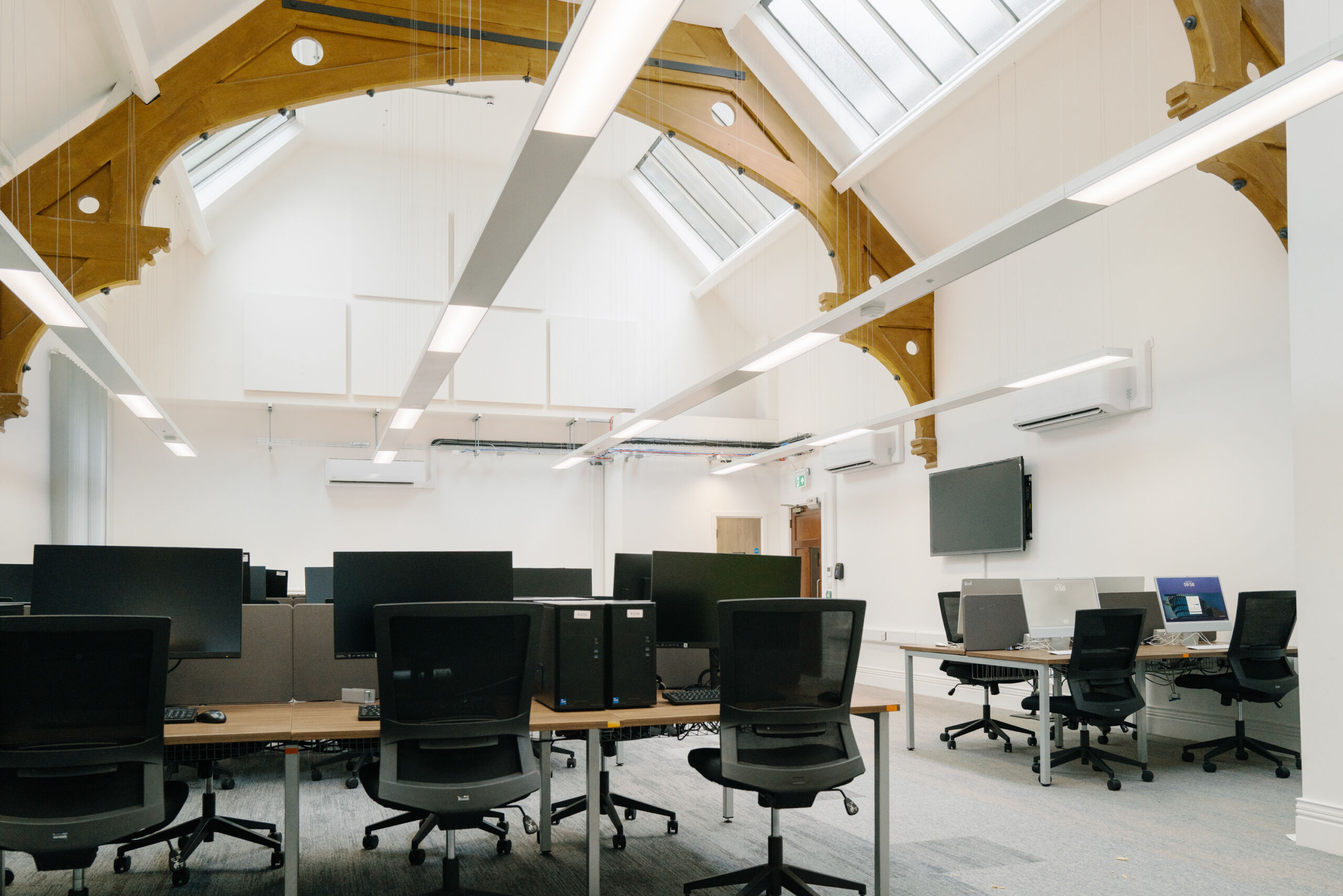
Internally, the building has been modernised to create high-quality teaching, learning and workspace environments tailored to three key user groups: the International Office, International Study Group and Postgraduate Research Group. The design also incorporates flexible ‘fallow’ space to accommodate future expansion and adaptability.
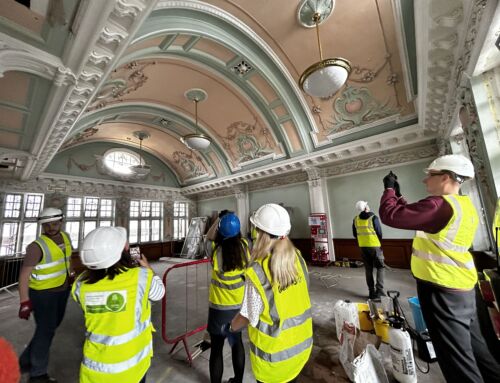
Throughout the refurbishment, a strong emphasis has been placed on retaining and celebrating the building’s historic fabric. Key original features, including the grand timber staircase, stained-glass windows, marble flooring, ornate coffered ceilings and the First World War memorial, have been carefully restored. Elsewhere, original architectural elements such as iron columns, timber trusses, architraves and cornices have been preserved and enhanced, ensuring the building’s heritage remains at the forefront of the design.
A central feature of the scheme is the reintroduction of a dramatic double-height event space. Achieved through the removal of a later-inserted floor, this intervention restores the building’s original proportions and reveals its striking stained-glass windows, allowing natural light to once again flood the space. The revitalised area now provides a flexible venue for events, seminars and large gatherings, enhancing the building’s role as a shared hub for the university community.
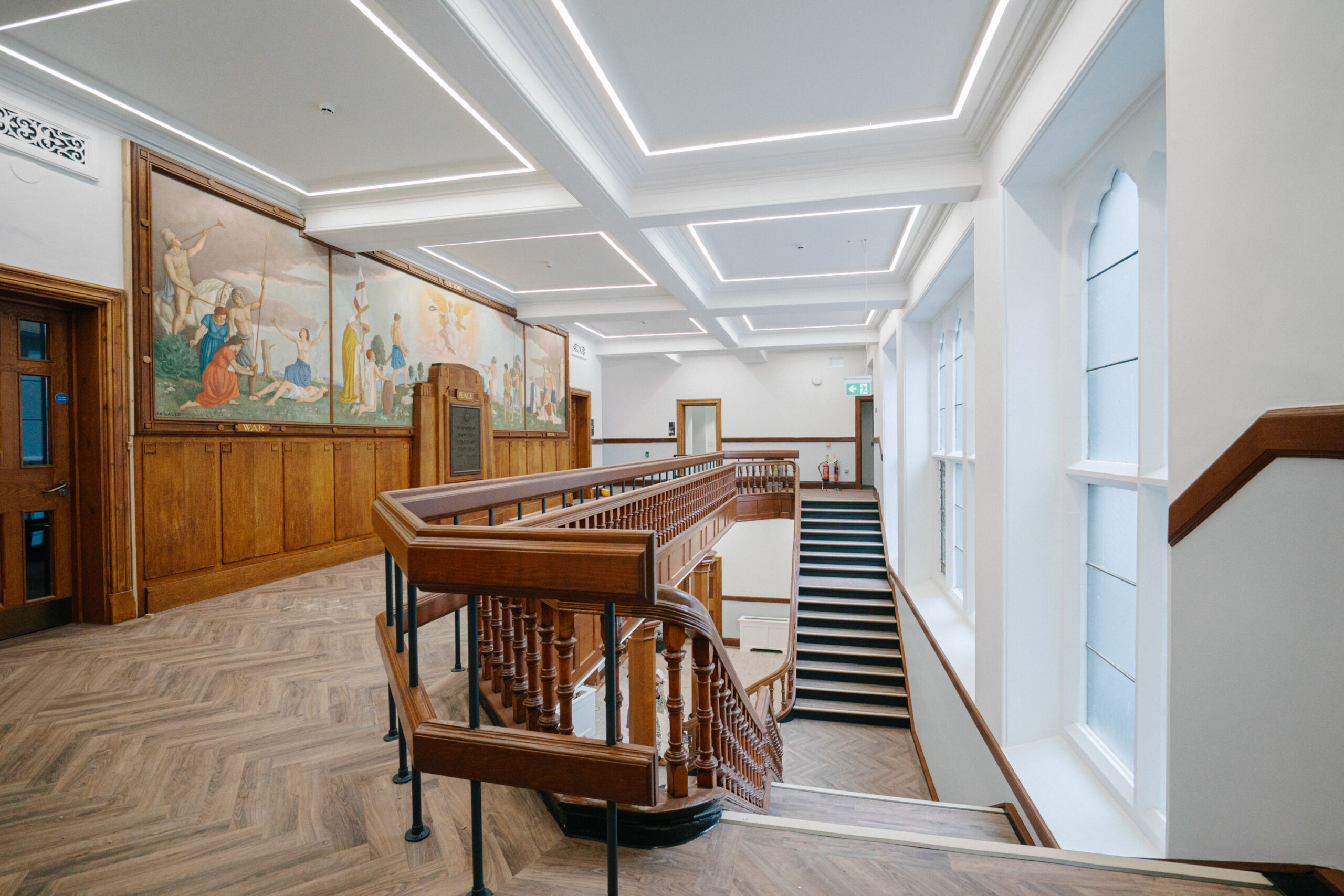
Ramsden Building Grand Timber Staircase - Credit: HBC
The ground floor has been transformed into a vibrant, light-filled environment for the International Study Group, with the introduction of new rooflights and contemporary finishes creating a welcoming and sociable space. Classrooms and offices throughout the building have been upgraded with improved ventilation, lighting and finishes, delivering a modern, comfortable and accessible environment for all users.
Alex Proctor, Project Partner at GSSArchitecture, commented: “We are immensely grateful to the University of Huddersfield for their trust and collaboration, which has been instrumental in bringing this vision to life.
Our team has worked incredibly hard to retain and celebrate the building’s rich history, allowing it to continually serve the University of Huddersfield for generations to come and successfully blending heritage with innovation to create a sustainable, future-ready facility.”
Lee Powell, Managing Director of HBC, said: “It has been a privilege for HBC to restore such an important building, one that holds a special place in Huddersfield’s history and community. We are proud to have contributed to the town’s education sector while ensuring the Ramsden Building’s legacy is preserved for future generations, at a time of positive change in the town centre.
“This project also reflects the continued growth of our presence in West Yorkshire and demonstrates our commitment to delivering projects that have a lasting positive impact on the local area.”
Tim Thornton, University of Huddersfield Deputy Vice-Chancellor, said: “The project has given new life to one of the oldest buildings on campus, allowing its proud heritage to shine through and providing cutting-edge facilities for our Doctoral College, International Office, and International Study Centre.”
The success of the project has been driven by a strong and collaborative partnership between the project and client teams throughout both the design and construction stages. GSSArchitecture has worked closely with Henry Boot Construction, Curtins, Buro Happold and Enevo to bring the scheme forward.
In recent years, we have built a strong relationship with the University of Huddersfield and continue to work closely with them across a number of public realm improvements, which are currently on site. The support continues offsite with several members of our team, including Alex Proctor, Chris Walker and Tom Dobby, offering their experience and insights into the industry to current architectural students.